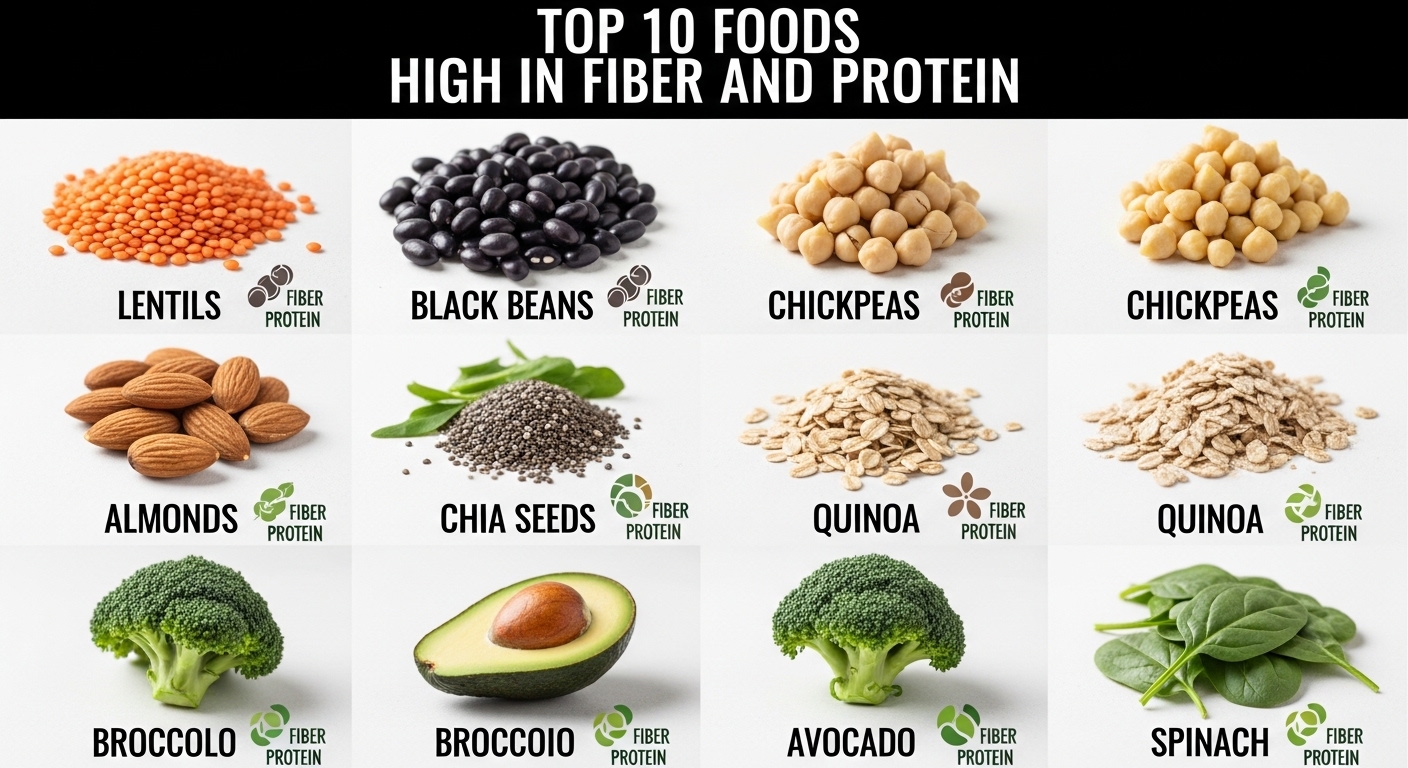
Top 10 Foods High in Fiber and Protein
Top 10 Foods High in Fiber and Protein — Complete Health Guide (2026)
A healthy diet is built on the right balance of nutrients, and two of the most important are protein and fiber. Protein is essential for muscle growth, tissue repair, and overall body function, while fiber plays a key role in digestion, heart health, and maintaining stable blood sugar levels.
When combined, foods rich in both protein and fiber can help you stay full longer, reduce unhealthy cravings, and improve overall wellness. That’s why nutritionists strongly recommend including the Top 10 foods high in fiber and protein in your daily diet.
In this detailed guide, we explore the Top 10 foods high in fiber and protein, their nutritional value, health benefits, and practical ways to include them in your meals.
1. Lentils — The Nutritional Powerhouse
Lentils are one of the most nutrient-dense plant-based foods available. They are widely used in soups, curries, and salads.
🔹 Nutrition (1 cup cooked)
- Protein: ~18g
- Fiber: ~15g
🔹 Benefits
Lentils support heart health by lowering cholesterol levels due to their high fiber content. They are also rich in iron, making them especially beneficial for vegetarians. The combination of protein and fiber helps keep you full for hours, reducing overeating.
🔹 How to Eat
You can add lentils to soups, make lentil curry, or mix them into salads for a protein boost.
2. Chickpeas — Versatile and Filling
Chickpeas are a staple in many cuisines around the world and are known for their nutty flavor.
🔹 Nutrition (1 cup cooked)
- Protein: ~15g
- Fiber: ~12g
🔹 Benefits
Chickpeas help regulate blood sugar levels and improve digestion. They are also a great source of plant-based protein for vegetarians and vegans.
🔹 How to Eat
Use chickpeas in hummus, salads, or roasted as a crunchy snack.
3. Black Beans — Heart-Healthy Choice
Black beans are rich in antioxidants and essential nutrients.
🔹 Nutrition (1 cup cooked)
- Protein: ~15g
- Fiber: ~15g
🔹 Benefits
They improve digestive health and help reduce the risk of heart disease. The high fiber content also supports healthy gut bacteria.
🔹 How to Eat
Add black beans to burritos, rice dishes, or soups.
4. Quinoa — Complete Plant Protein
Quinoa is unique because it contains all nine essential amino acids.
🔹 Nutrition (1 cup cooked)
- Protein: ~8g
- Fiber: ~5g
🔹 Benefits
It supports muscle repair and is gluten-free, making it suitable for people with gluten intolerance. It also provides magnesium and iron.
🔹 How to Eat
Use quinoa as a base for salads, bowls, or as a substitute for rice.
5. Chia Seeds — Small but Powerful
Chia seeds are tiny but packed with nutrients.
🔹 Nutrition (2 tablespoons)
- Protein: ~4g
- Fiber: ~10g
🔹 Benefits
They support heart health with omega‑3 fatty acids and improve digestion. Their ability to absorb water helps control appetite.
🔹 How to Eat
Add chia seeds to smoothies, yogurt, or make chia pudding.
6. Almonds — Healthy Snack Option
Almonds are one of the most popular nuts worldwide.
🔹 Nutrition (28g)
- Protein: ~6g
- Fiber: ~4g
🔹 Benefits
They promote brain health, improve cholesterol levels, and provide long-lasting energy.
🔹 How to Eat
Snack on almonds or add them to oatmeal and salads.
7. Oats — Perfect Breakfast Choice
Oats are widely known for their heart-health benefits.
🔹 Nutrition (1 cup cooked)
- Protein: ~5g
- Fiber: ~4g
🔹 Benefits
They contain beta-glucan, which helps lower cholesterol. Oats also provide steady energy throughout the day.
🔹 How to Eat
Enjoy oats as oatmeal, overnight oats, or in smoothies.
8. Greek Yogurt — High Protein Booster
Greek yogurt is rich in protein and probiotics.
🔹 Nutrition (100g)
- Protein: ~10g
- Fiber: Low (combine with fiber foods)
🔹 Benefits
It supports gut health, strengthens immunity, and aids muscle recovery.
🔹 How to Eat
Combine with fruits, nuts, or chia seeds to increase fiber content.
9. Avocado — Fiber-Rich Superfood
Avocado is known for its creamy texture and healthy fats.
🔹 Nutrition (1 medium)
- Protein: ~2g
- Fiber: ~10g
🔹 Benefits
It supports heart health, improves digestion, and keeps you full longer.
🔹 How to Eat
Add avocado to toast, salads, or smoothies.
10. Edamame — Plant-Based Protein Champion
Edamame is a popular snack made from young soybeans.
🔹 Nutrition (1 cup)
- Protein: ~17g
- Fiber: ~8g
🔹 Benefits
It supports muscle growth, improves bone health, and provides antioxidants.
🔹 How to Eat
Eat edamame as a snack or add it to salads and stir-fries.
🌟 Why These Are the Top 10 Foods High in Fiber and Protein
The Top 10 foods high in fiber and protein provide a powerful combination of nutrients that benefit the body in multiple ways:
✅ Improved Digestion
Fiber supports gut health and prevents constipation.
✅ Weight Management
Protein and fiber keep you full, reducing calorie intake.
✅ Heart Health
These foods help lower cholesterol and blood pressure.
✅ Energy Boost
They provide steady energy without sugar crashes.
📊 Daily Diet Tips
To get the most from the Top 10 foods high in fiber and protein, follow these tips:
- Start your day with oats or Greek yogurt
- Add beans or lentils to lunch
- Snack on almonds or edamame
- Include chia seeds in smoothies
- Replace processed foods with whole foods
⚠️ Important Advice
- Increase fiber intake gradually to avoid digestive discomfort
- Drink plenty of water
- Combine plant proteins for complete nutrition
Conclusion
The Top 10 foods high in fiber and protein are essential for a balanced and healthy lifestyle. They support digestion, improve muscle health, and help maintain energy levels throughout the day.
By including foods like Lentils, Chickpeas, and Edamame in your meals, you can significantly improve your overall health and well-being.