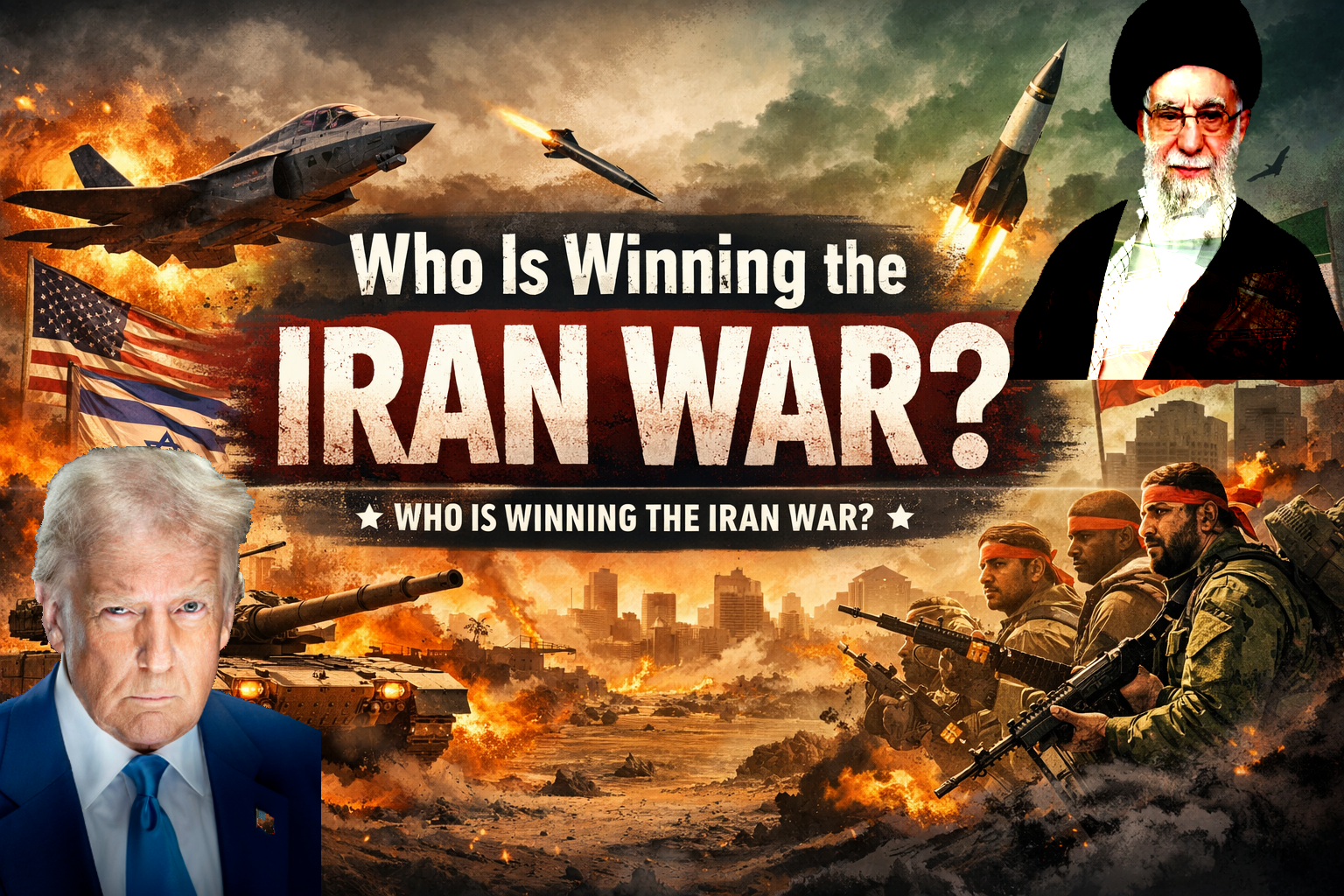
Who Is Winning the Iran War?
Who Is Winning the Iran War? A Complete Analysis of Iran War 2026
The Iran War 2026 has captured global attention due to its complexity, scale, and regional impact. From airstrikes to missile attacks, and cyberwarfare to strategic economic disruptions, the conflict has proven that modern warfare is multi-dimensional. Many observers are asking who is winning the Iran war, but the answer is far from simple. Both sides have achieved tactical gains while facing serious setbacks, making it impossible to declare a definitive winner at this stage.
1) How the Iran War 2026 Began
The Iran War 2026 officially started on February 28, 2026, when the United States and Israel launched coordinated operations against Iran. The initial campaign targeted Iranian military bases, nuclear sites, and key leadership figures. Reports indicate that these strikes caused significant casualties among high-ranking officials, including members of Iran’s top military command.
Iran responded immediately with ballistic missile and drone attacks targeting Israel, U.S. military bases in the region, and allied states. The conflict quickly expanded, affecting multiple Middle Eastern countries and civilian infrastructure. As analysts continue to examine events, the question of who is winning the Iran war remains at the forefront of international discussion.
2) Multiple Battlefields: Military, Cyber, and Economic
The Iran War 2026 is not just a conventional war. It spans multiple domains:
- Air and missile warfare: Extensive bombing campaigns and aerial battles dominate the conventional military front.
- Proxy and regional engagement: Iran leverages militias and allied groups, while the U.S. and Israel respond directly or through proxies.
- Cyber operations: Both sides conduct cyberattacks targeting communications, military systems, and critical infrastructure.
- Economic and strategic impact: The conflict affects global oil markets, supply chains, and regional stability.
Because the war is multi-dimensional, answering who is winning the Iran war depends on which aspect — military, economic, or political — one considers.
3) Tactical Outcomes So Far
United States & Israel:
- Military superiority: Coalition forces have degraded many of Iran’s conventional capabilities through precision airstrikes.
- Air dominance: U.S. and Israeli forces maintain control over significant portions of Iranian airspace.
- Successful operations: High-risk missions, including the rescue of a downed U.S. airman, have been completed without coalition casualties.
Iran:
- Retaliation capability: Iran continues to conduct missile and drone strikes targeting U.S. allies.
- Strategic leverage: Iran’s ability to disrupt the Strait of Hormuz affects global oil prices and exerts economic pressure.
- Resilience: Surviving extensive airstrikes without internal collapse counts as a form of strategic victory for Iran.
These developments make it difficult to determine who is winning the Iran war, as both sides have successes and ongoing challenges.
4) Strategic Goals vs. Battlefield Control
The goals of the conflict vary dramatically between the parties:
- U.S. and Israel: Aim to weaken Iran’s military, halt its nuclear program, and reduce its regional influence.
- Iran: Strives to maintain regime stability, resist foreign coercion, and create leverage for future negotiations.
Traditional measures of victory — territory, casualties, or complete military collapse — do not fully apply. Therefore, strategic outcomes, endurance, and economic influence are equally important. This makes assessing who is winning the Iran war even more complicated.
5) Impact Beyond Military Operations
The Iran War 2026 has global ramifications beyond battlefield engagements:
- Humanitarian toll: Thousands of civilians have been affected due to damaged infrastructure, hospitals, and utilities.
- Economic disruption: Global oil markets have surged and supply chains have been disrupted, causing ripple effects worldwide.
- Psychological and political effects: Both sides use propaganda, media, and diplomatic messaging to influence public perception.
All these factors play a crucial role in the ongoing debate about who is winning the Iran war, showing that modern conflict is not just measured by bombs and missiles.
6) Why No Side Can Claim a Clear Victory Yet
Despite heavy losses on both sides:
- Iran’s leadership has not collapsed and continues military operations.
- The U.S. and Israel have yet to fully achieve their strategic objectives, including neutralizing all missile programs and forcing political compliance.
- Iran continues to demonstrate resilience, projecting the image of strength both regionally and globally.
These realities emphasize why experts are hesitant to declare who is winning the Iran war, as the conflict is ongoing and outcomes remain fluid.
7) Expert Perspectives
Analysts stress the complexity of determining victory in the Iran War 2026:
- Some highlight the U.S. and Israel’s tactical superiority and successful strikes against Iranian targets.
- Others emphasize Iran’s ability to endure attacks and maintain operational capabilities as a form of strategic success.
A key lesson from experts is that prolonged conflicts favor resilience and adaptability, rather than sheer military power, making who is winning the Iran war a nuanced and evolving question.
8) The Broader Geopolitical Picture
The war influences global power dynamics beyond Iran:
- Regional actors: Gulf states and neighboring countries must adjust security strategies.
- Global powers: China, Russia, and other nations may benefit from instability or gain diplomatic leverage as Western powers are tested.
Therefore, the ultimate “winner” of the Iran War 2026 might include states that benefit indirectly from the conflict’s economic and political consequences.
Conclusion: No Definitive Winner Yet
In conclusion, the Iran War 2026 has no clear victor so far. The U.S. and Israel have degraded Iran’s capabilities, but Iran continues retaliatory strikes and strategic disruption. Both sides perceive progress differently: one emphasizes military dominance, the other survival and leverage.
For analysts and observers asking who is winning the Iran war, the answer remains that it is too early to tell, as the conflict is ongoing and multidimensional. Its ultimate outcome will depend on the duration of hostilities, global economic effects, and potential diplomatic resolutions.